When world leaders, innovators, and investors gathered in Brussels on October 8 for the 3rd EU–Caribbean Global Gateway Conference on Sargassum, the sense of urgency was tangible. The annual Sargassum influx continues to threaten Caribbean ecosystems, coastal economies, and communities. While the challenge grows each year, so does the determination to turn it into opportunity.
At SarGas Ltd, we were honored to contribute to this important dialogue, participating in the panel Processing and Valorization to share insights from our work developing Grenada’s first large-scale sargassum-to-biogas facility.
The Urgency of Action
As the Honorable Prime Minister Dickon Mitchell of Grenada said during his opening remarks: “It will be difficult, but we have no choice but to overcome this challenge.”
That statement framed the tone of the entire conference. The Sargassum problem can no longer wait for pilot projects or partial solutions: the time has come for replicable, scalable systems that combine technology, innovation, finance, and community ownership.
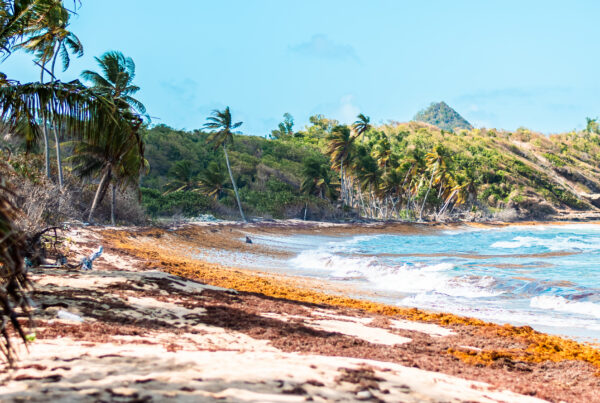
Each year, millions of tonnes of Sargassum reach Caribbean shores, impacting marine life, tourism, and local economies. Addressing this requires more than cleanup efforts. It demands a new circular bioeconomy that transforms Sargassum from a waste problem into a renewable resource.
Building Value Chains That Last
The conference theme, “From Start-Up to Scale-Up,” reflected a key reality: innovation exists, but scaling it up is the challenge.
Start-ups and research initiatives across the region, from Mexico to Grenada and the Dominican Republic, showcased promising technologies for monitoring, collection, processing, and product development. What emerged clearly was the need for:
- Market-driven solutions that create real economic value.
- Financial instruments and blended funding to enable growth.
- Reliable forecasting and data-sharing to make sargassum management predictable.
- Policy alignment to ensure scalability and long-term impact.
During the Processing and Valorization session, our CEO and Co-founder Benjamin Nestorovic presented how SarGas Ltd addresses this challenge through anaerobic digestion, producing renewable biogas and organic fertilizer from Sargassum.
Our upcoming facility in Grenada, SarGas ONE, will process 7,000 tonnes of Sargassum annually, generating 1.3 GWh of renewable electricity that will support the country’s energy transition and reduce fossil dependency. The project also contributes to local agriculture through the production of organic fertilizer, demonstrating a model that can be replicated across the Caribbean.
Partnership and Progress
Throughout the event, collaboration emerged as the cornerstone for progress. Representatives from the World Bank, European Investment Bank, and Inter-American Development Bank highlighted the importance of partnerships and blended finance to move from pilot projects to impactful implementation.
A key milestone was the signing of a commitment to turn 660,000 tonnes of Sargassum into opportunity, symbolizing the shared ambition of the EU and Caribbean nations to act decisively.
At SarGas Ltd, we are proud to be part of this growing regional effort to turn environmental pressure into sustainable potential. With innovation, policy support, and partnership, the Caribbean can become a global leader in blue bioeconomy solutions: creating jobs, protecting ecosystems, and accelerating the clean energy transition for SIDS.
The challenge is significant, but so is the opportunity. Together, we can turn the tide.